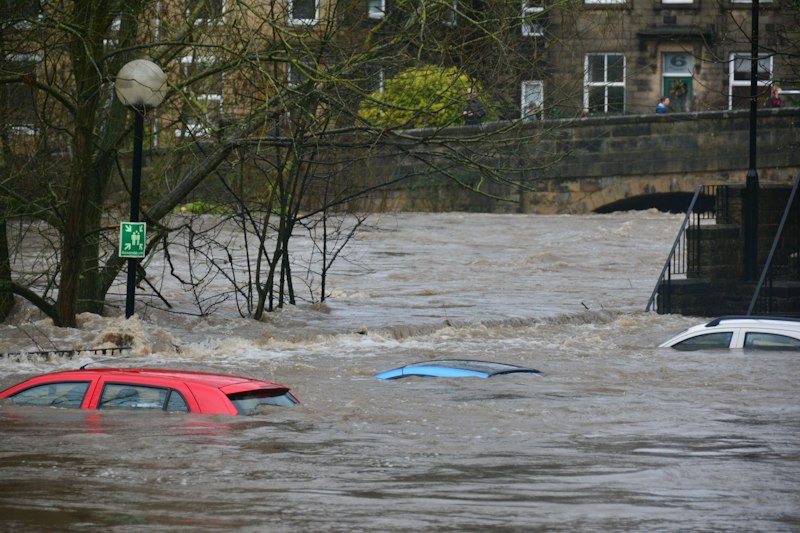
Turn Around, Don't Drown
Nearly half of all flash flood deaths occur in vehicles. Just 12 inches of moving water can sweep away a car. You cannot judge water depth or what's beneath the surface. If you encounter a flooded road, turn around—find another route. No destination is worth your life.
Understanding Flood Power
Water is deceptively powerful. The force of moving water increases exponentially with depth and speed:
Knock down adult
Sweep away car
Move SUVs/trucks
Float most vehicles
Floodwater also carries hidden dangers: contamination from sewage, chemicals, and debris; downed power lines; submerged obstacles; and swift currents that can pull even strong swimmers under.
Know Your Flood Risk

FEMA maintains flood maps showing risk zones. Check your property's designation:
High-Risk Zones (A, AE, AH, AO, V, VE)
Areas with 1% annual chance of flooding (100-year floodplain). Mandatory flood insurance if you have a federally-backed mortgage. 25% of flood claims come from these zones.
Moderate-Risk Zones (B, X shaded)
Areas between the 100-year and 500-year flood levels. Flood insurance recommended. About 20% of flood claims come from moderate-risk zones.
Low-Risk Zones (C, X unshaded)
Areas outside the 500-year floodplain. Flood insurance optional but available. Importantly, over 20% of flood claims come from low-risk zones. Floods don't follow maps—they follow water.
Check Your Risk
- Visit FEMA's Flood Map Service Center
- Review local flood history with your emergency management office
- Note nearby streams, rivers, and drainage patterns
- Understand that development changes flood patterns—maps may be outdated
Flood Insurance
Critical: Homeowners Insurance Does NOT Cover Floods
Standard homeowners insurance excludes flood damage. You must purchase separate flood insurance through the National Flood Insurance Program (NFIP) or private insurers. There's a 30-day waiting period—you cannot buy coverage when a storm is approaching.
Flood Insurance Facts
- Available through NFIP or private insurers
- Covers building and contents (purchased separately)
- Average policy costs $700-1,000/year (varies by risk)
- Maximum NFIP coverage: $250,000 building, $100,000 contents
- Excess flood insurance available for higher limits
- Renters can purchase contents-only coverage
Flood Watch vs. Warning
Flood Watch
Flooding is possible. Monitor conditions, review your plan, and prepare to evacuate if conditions worsen.
Flood Warning
Flooding is occurring or imminent. Take action immediately—move to higher ground if in flood-prone area.
Flash Flood Warning
MOVE TO HIGHER GROUND IMMEDIATELY. Life-threatening flooding expected within minutes to hours. Do not wait—flash floods give almost no warning time.
Before Flood Season
Home Preparation
- Purchase flood insurance: 30-day waiting period—buy before you need it
- Document belongings: Photos/video of valuable items for insurance claims
- Know your shutoffs: Locate water, gas, and electrical shutoffs
- Clear drains: Keep gutters, downspouts, and storm drains clear
- Store valuables high: Important documents, electronics above flood level
- Consider flood-proofing: Sump pump with battery backup, flood vents, barriers
Sump Pump Essentials
If your area floods, a sump pump with battery backup is critical:
- Test pump regularly—don't wait for an emergency
- Battery backup provides 8-12 hours of pumping during power outages
- Water-powered backup systems work indefinitely (require water pressure)
- Clean sump pit annually to prevent clogs
When Flooding Threatens

If Time Permits
- Move vehicles to higher ground
- Move valuables and furniture to upper floors
- Fill bathtubs with clean water for drinking/flushing
- Turn off utilities if instructed or if flooding is imminent
- Disconnect electrical appliances—do NOT touch if you're wet or standing in water
- Deploy sandbags around doorways if available
Evacuation Rules
- Evacuate when ordered: Don't wait for water to rise
- Don't walk through moving water: 6 inches can knock you down
- Don't drive through floodwater: Turn around, don't drown
- If water rises around car: Abandon vehicle and move to higher ground
- Move UP, not into attic: Go to upper floors with roof access, not attics where you could be trapped
Attic Warning
Many flood victims have drowned trapped in attics as water rose. If you must go to an attic, bring tools (axe, hatchet) to break through to the roof. Better: evacuate early or go to the highest floor with roof access.
After the Flood
Returning Home Safely
- Wait for official all-clear: Water may still be contaminated or structures unstable
- Photograph everything: Document all damage before cleanup for insurance
- Check structural damage: Look for foundation cracks, sagging floors from outside
- Don't enter if unsafe: Gas smell, electrical damage, structural damage
- Shut off power: If not already off, have electrician inspect before restoring
Cleanup Safety
- Protective gear: Rubber boots, waterproof gloves, N95 mask, goggles
- Floodwater contamination: Assume contact with sewage, chemicals, debris
- Don't use tap water: Until officially cleared
- Discard contaminated food: Anything that touched floodwater
- Act fast for mold: Remove wet materials within 24-48 hours
- Clean and disinfect: All surfaces with soap/water, then bleach solution (1 cup per gallon)
- Never mix: Bleach with ammonia or other cleaners—toxic fumes
Mold Prevention
Mold begins growing within 24-48 hours of flooding:
- Remove all wet materials: drywall, insulation, carpet, padding
- Open windows and use fans/dehumidifiers
- Don't paint or seal until completely dry
- Discard items that can't be thoroughly dried
- Professional mold remediation may be needed for extensive damage
Insurance Claims
- Document damage with photos and video before cleanup
- Contact insurance company promptly
- Make temporary repairs to prevent further damage (keep receipts)
- Keep damaged items until adjuster inspects
- Get multiple contractor estimates
- Keep all receipts for cleanup, repairs, and temporary housing
Frequently Asked Questions
Just 12 inches of moving water can sweep away a small car. 18-24 inches can move larger vehicles and SUVs. Two feet of standing water can float most vehicles. Never drive through flooded roads—"Turn Around, Don't Drown." Half of all flood deaths occur in vehicles.
No—standard homeowners insurance does NOT cover flood damage. You need a separate flood insurance policy through the National Flood Insurance Program (NFIP) or private insurers. Flood insurance has a 30-day waiting period, so you must purchase it before flood season, not when a storm is approaching.
A Flood Watch means flooding is possible—prepare to evacuate and monitor conditions. A Flood Warning means flooding is occurring or imminent—take action now. A Flash Flood Warning is the most urgent—move to higher ground immediately as life-threatening flooding is expected within minutes to hours.
Wait for official all-clear. Photograph all damage before cleanup. Wear protective gear including rubber boots, gloves, and N95 mask. Floodwater is contaminated with sewage, chemicals, and debris. Don't use tap water until cleared. Remove wet materials within 24-48 hours to prevent mold. Never mix bleach with ammonia cleaners.
Only go to an attic if you have a way to escape to the roof (axe, hatchet, or roof access). Many people have drowned trapped in attics with no way out as water rose. It's better to evacuate early or go to the highest floor with roof access. If you must go to the attic, bring tools to break through the roof.
Calculate Your Flood Preparedness
Complete Flood-Proofing Guide
Want to protect your home from flooding? Our comprehensive guide covers flood barriers, sump pumps with battery backup, waterproofing, drainage improvements, and budget tiers from $150 to $50,000+.
Read the Full Flood-Proofing Guide →Related Guides
← All Disaster Guides · Flood-Proofing Your Home · Hurricane Guide · Power Outage Guide · 72-Hour Kit Checklist
States at High Risk for Flooding
Louisiana · Florida · Texas · Mississippi · Arkansas · Missouri · Iowa · West Virginia