



How to Size a Whole House Standby Generator
A whole house standby generator is the ultimate backup power solution. Unlike portable generators, standby units start automatically within seconds of an outage and can power your entire home for as long as fuel is available. But choosing the right size is critical—too small and you'll trip breakers, too large and you've wasted money.
Understanding Generator Sizing
Standby generators are rated in kilowatts (kW), which represents their continuous power output. The key factors that determine your generator size:
- Home size: Larger homes have more circuits, lighting, and outlets
- HVAC system: Central AC is typically the largest single load
- Electrical service: 200A service can draw more than 100A service
- Major appliances: Electric heat, water heaters, and EV chargers add significant load
- Backup coverage: Whole home vs. essential circuits only
AC Size and Generator Requirements
Your air conditioning system is usually the largest power consumer. Here's how AC tonnage affects generator sizing:
| AC Size | Running Watts | Starting Watts | Home Size |
|---|---|---|---|
| 2 Ton | 2,400W | 4,800W | 1,000-1,500 sq ft |
| 3 Ton | 3,600W | 7,200W | 1,500-2,500 sq ft |
| 4 Ton | 4,800W | 9,600W | 2,500-3,500 sq ft |
| 5 Ton | 6,000W | 12,000W | 3,500+ sq ft |
Important: Generators must handle the starting surge (typically 2x running watts) when the AC compressor kicks on.
Whole House Generator Size Recommendations
14-18 kW: Smaller Homes
- Under 2,000 sq ft
- 2-3 ton AC system
- Gas appliances (stove, dryer, water heater)
- 100-150A electrical service
- Est. installed cost: $10,000-$15,000
20-24 kW: Average Homes (Most Popular)
- 2,000-3,000 sq ft
- 3-4 ton AC system
- Some electric appliances
- 200A electrical service
- Est. installed cost: $12,000-$20,000
26-48 kW: Larger Homes
- 3,000+ sq ft
- 4-5+ ton AC or multiple units
- Electric heat, EV charging, pool equipment
- 200-400A electrical service
- Est. installed cost: $18,000-$35,000
Natural Gas vs. Propane
Natural Gas
- Pros: Unlimited fuel supply, no storage tank needed, lower fuel cost
- Cons: Requires gas line, slightly lower power output, gas supply can fail in major disasters
- Best for: Homes with existing natural gas service
Propane (LP)
- Pros: Works anywhere, stores indefinitely, higher power output
- Cons: Requires tank installation, fuel delivery needed, tank can run empty
- Best for: Rural areas, homes without gas lines
Dual Fuel
Many generators support both fuels, providing flexibility. You can run on natural gas normally and switch to propane if gas pressure drops during high-demand emergencies.
Load Management Technology
Modern standby generators often include smart load management systems that allow a smaller generator to power more of your home:
- How it works: The system monitors total load and temporarily sheds non-essential circuits when demand peaks
- Example: When AC starts, it briefly turns off the electric dryer, then restores it after the AC surge passes
- Benefit: A 22 kW generator with load management can handle what would normally require 30+ kW
Installation Considerations
Transfer Switch
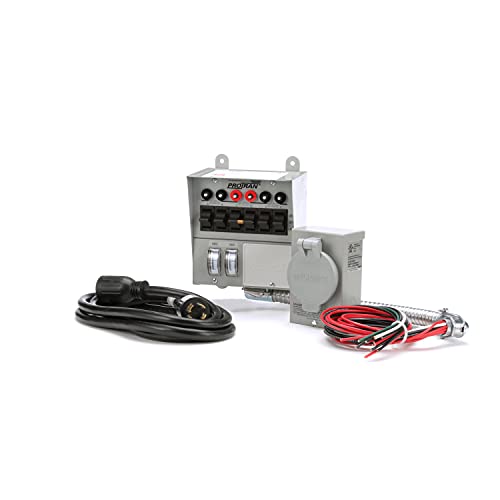
Every standby generator requires an automatic transfer switch (ATS) that:
- Monitors utility power
- Disconnects your home from the grid during outages
- Connects the generator to your electrical panel
- Transfers back when utility power returns
Placement Requirements
- 5 feet from windows, doors, and fresh air intakes
- 18 inches from the house wall
- Must meet local codes and HOA requirements
- Needs concrete pad or gravel base
Permits and Installation
Standby generators require:
- Electrical permit
- Gas permit (if applicable)
- Licensed electrician for installation
- Professional gas line work
- Inspection and approval
Cost Breakdown
| Component | Cost Range |
|---|---|
| Generator unit (14-24 kW) | $4,000-$8,000 |
| Generator unit (26-48 kW) | $8,000-$18,000 |
| Automatic transfer switch | $500-$2,000 |
| Installation labor | $3,000-$6,000 |
| Permits and inspection | $200-$500 |
| Propane tank (if needed) | $1,500-$3,000 |
| Gas line work | $500-$2,000 |
| Total installed | $10,000-$30,000+ |
Get Professional Quotes
For accurate pricing, contact 2-3 authorized dealers in your area. They'll perform a site assessment and provide detailed quotes including all equipment and installation.
Frequently Asked Questions
For most homes, a 22-24 kW generator powers everything including central AC. Smaller homes (under 2,000 sq ft) may only need 14-18 kW. Larger homes or those with electric heat, multiple AC units, or electric vehicle charging may need 26-48 kW.
A 2,500 sq ft home typically needs a 22-26 kW generator for whole house backup including central AC. If you have gas appliances and a smaller AC unit (3 ton or less), 18-22 kW may suffice. Electric heat or large AC systems require 26 kW or more.
A whole house standby generator costs $5,000-$25,000 for the unit plus $3,000-$10,000 for installation. Total installed cost ranges from $10,000 for basic 14 kW systems to $30,000+ for large 48 kW systems. Costs vary by region, fuel type, and installation complexity.
Standby generators are permanently installed, start automatically within seconds of an outage, run on natural gas or propane (no refueling), and power your entire home. Portable generators require manual setup, gas refueling, and typically only power select circuits.
Natural gas is ideal if you have a gas line - unlimited fuel supply and no storage needed. Propane works anywhere and stores indefinitely, but requires tank installation. Dual-fuel generators offer flexibility. Natural gas produces slightly less power per unit but never runs out.
From the Creators of DisasterPrepCalc
The Complete Survival Guide for America 2026
Everything you need to protect your family — from natural disasters to grid failures. Available on Amazon.
Get the Book on Amazon →As an Amazon Associate, we earn from qualifying purchases.