A portable generator is one of the most important emergency preparedness purchases you can make. When the grid goes down—whether from a hurricane, ice storm, wildfire, or infrastructure failure—a reliable generator keeps your refrigerator running, your phones charged, your sump pump working, and your family safe.
But the generator market is overwhelming. Hundreds of models, conflicting reviews, and confusing specs make choosing the right one difficult. We cut through the noise by comparing 40+ models across the metrics that matter most for emergency use: reliability, runtime, noise level, fuel flexibility, and value.
Use our Generator Size Calculator to determine exactly what wattage you need before buying.
Our Top 10 Picks at a Glance
| Generator | Best For | Watts | Price |
|---|---|---|---|
| Honda EU2200i | Overall Best | 2,200W | ~$1,200 |
| Westinghouse iGen4500 | Best Mid-Range | 4,500W | ~$850 |
| Champion 4000W Dual Fuel | Best Value | 4,000W | ~$719 |
| PowerSmart 3600W Inverter | Budget Power | 3,600W | ~$400 |
| Generac 3300W Inverter | Lightweight | 3,300W | ~$850 |
| WEN 56235i | Budget Inverter | 2,350W | ~$376 |
| Firman WH03041 Dual Fuel | Dual Fuel Value | 3,300W | ~$760 |
| Pulsar GX400BN Dual Fuel | Ultra Budget | 4,000W | ~$499 |
| Anker SOLIX C1000 (Solar) | Best Solar/Indoor | 1,800W | ~$430 |
| Anker SOLIX S2000 (Solar) | Big Battery Backup | 1,500W | ~$650 |
1. Honda EU2200i — Best Overall Portable Generator

Honda EU2200i
The gold standard in portable inverter generators. Legendary reliability, whisper-quiet operation, and the cleanest power output available.
The Honda EU2200i is the generator that emergency professionals, preppers, and camping enthusiasts all agree on. It starts on the first pull every single time—even after months in storage. That reliability alone makes it our top pick, because when the power goes out at 2 AM during a storm, the last thing you want is a generator that won't start.
At just 47 pounds, it's genuinely portable. The inverter technology produces clean, stable power that's safe for laptops, phones, CPAP machines, and other sensitive electronics. At 48-57 dBA, it's quieter than a normal conversation.
Who it's for: Anyone who prioritizes reliability above all else and needs to power essentials (refrigerator, lights, charging, Wi-Fi router).
What We Like
- Legendary Honda reliability
- Ultra-quiet at 48 dBA
- Clean inverter power
- Parallel-capable for double power
- Best fuel efficiency in class
Limitations
- Premium price point
- Limited to 2,200W
- Gas only (no propane option)
2. Westinghouse iGen4500 — Best Mid-Range Inverter

Westinghouse iGen4500
Clean inverter power with enough wattage to run a window AC unit. The best of both worlds for families who need more power without sacrificing quality.
If the Honda doesn't have enough power for your needs, the Westinghouse iGen4500 is where you step up. At 3,700 running watts, it can handle a refrigerator, freezer, window AC unit, lights, and charging simultaneously—basically everything most families need during an outage.
The LED data center shows real-time power output, remaining runtime, and fuel level, so you always know exactly where you stand. Remote start is included, and at 52 dBA, it's still remarkably quiet for its output.
Who it's for: Families who need to run a window AC plus essentials, or anyone who wants more headroom than a 2,000W unit provides.
What We Like
- Clean inverter power at 4,500W
- Remote start convenience
- LED data display
- Quiet at 52 dBA
- Can run window AC units
Limitations
- ~$1,000 price tag
- 93 lbs is heavy for portable
- Gas only on base model
3. Champion 4000W Dual Fuel — Best Value

Champion 4000W Dual Fuel
The sweet spot of power, price, and fuel flexibility. Runs on gasoline or propane with clean inverter power.
The Champion 4000W dual fuel inverter hits the sweet spot for most preppers. You get clean inverter power, enough wattage for a full suite of emergency essentials, and the ability to switch to propane when gasoline runs scarce during extended outages.
Propane stores indefinitely (unlike gasoline which degrades in 3-6 months), so you can keep several 20-lb tanks in your garage and know they'll work years from now. The electric start is a welcome convenience, and Champion's 3-year warranty provides peace of mind.
Who it's for: Preppers who want fuel flexibility and great value. Perfect for those who keep propane tanks on hand.
What We Like
- Dual fuel (gas + propane)
- Clean inverter power
- Electric start
- Outstanding value at ~$719
- 3-year Champion warranty
Limitations
- Louder than the Honda
- Slightly less power on propane
- 95 lbs is moderately heavy
4. PowerSmart 3600W Inverter — Best Budget Power

PowerSmart 3600W Inverter
Serious inverter power at a budget price. RV ready with a 30A outlet and quiet technology for under $400.
The PowerSmart 3600W inverter delivers inverter-quality power at a price hundreds less than brand-name competitors. At 3,000 running watts, it handles a refrigerator, lights, fans, and charging with ease, and the RV-ready 30A outlet makes it versatile.
It's not as refined as the Honda or Westinghouse, the build quality is a step down, but for emergency use where it sits in storage 99% of the time and needs to work when called upon, the PowerSmart delivers solid performance at an unbeatable price.
Who it's for: Budget-conscious buyers who still want inverter-quality power for under $400.
What We Like
- Inverter power at a budget price
- 3,000W is enough for essentials
- Quiet technology
- RV-ready 30A outlet
- Good fuel efficiency
Limitations
- Smaller brand, fewer parts
- Build quality below premium brands
- Gas only
5. Generac 3300W Inverter — Best Lightweight Option

Generac 3300W Inverter
From the biggest name in standby generators comes a surprisingly capable portable. Lightweight, compact, and feature-rich with USB charging.
Generac is the 800-lb gorilla in standby generators, and their 3300W portable inverter brings that expertise to a compact package. It's light enough for one person to carry easily, and it produces clean, stable power safe for sensitive electronics.
The USB outlets are a nice touch for direct device charging, and the compact design makes storage and transport simple.
Who it's for: Those who value portability and brand reputation. Good for single-person households or as a secondary/backup unit.
What We Like
- Lightweight and compact
- Clean inverter power
- USB charging ports
- Generac brand reputation
- Great for home backup and RV
Limitations
- Gas only
- Premium price for the wattage
- Smaller tank = shorter runtime
6. WEN 56235i — Best Budget Inverter
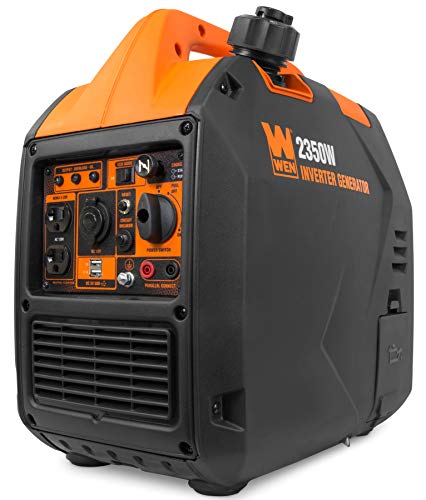
WEN 56235i
Clean inverter power under $400. Proves you don't need to spend $1,000+ for quality backup power.
The WEN 56235i proves that clean inverter power doesn't have to cost $1,000+. At around $376, it delivers 1,900 running watts of clean power that's safe for all electronics, and at 51 dBA, it's whisper quiet.
It's an excellent choice for powering a refrigerator, lights, fans, and charging devices. The eco-mode feature adjusts engine speed based on load, maximizing fuel economy during light-use periods. WEN's 2-year warranty adds confidence.
Who it's for: Budget-conscious buyers who want clean inverter power for essentials. Great starter generator for new preppers.
What We Like
- Under $400 for inverter power
- Very quiet at 51 dBA
- Clean power for electronics
- Lightweight at 48 lbs
- Eco-mode for fuel savings
Limitations
- 1,900W won't run AC
- No electric start
- Smaller brand, fewer parts
7. Firman WH03041 Dual Fuel — Best Dual Fuel Value

Firman WH03041 Dual Fuel
Dual fuel inverter power at a mid-range price. Runs on gas or propane and is parallel ready for extra capacity.
Firman has been gaining market share by offering strong features at a competitive price. The Firman WH03041 runs on gas or propane, produces clean inverter power, and is parallel ready so you can add a second unit for more capacity.
At 3,000 running watts on gasoline, it handles most emergency essentials comfortably. The build quality has improved significantly in recent generations, and at 58 dBA it stays quiet for its class.
Who it's for: Value hunters who want dual fuel and inverter power. Excellent for propane preppers who want fuel flexibility.
What We Like
- Dual fuel (gas + propane)
- Clean inverter power
- Parallel ready
- Quiet at 58 dBA
- Good power-to-price ratio
Limitations
- Less established brand
- Recoil start only
- Heavier than class average
8. Pulsar GX400BN 4000W Dual Fuel — Best Ultra Budget

Pulsar GX400BN 4000W Dual Fuel
The most watts per dollar in our lineup. Ultra-quiet dual fuel power with a CO sensor, wheels, and handle.
At around $499 for a dual fuel generator with 3,500 running watts, the Pulsar GX400BN is an affordable way to get serious backup power. It runs ultra-quiet for its class and includes a built-in CO sensor for safety, plus wheels and a handle for easy moving.
The dual fuel capability at this price point is remarkable. When money is tight but you need backup power, the Pulsar delivers. It is also parallel capable if you later want to double your output.
Who it's for: Anyone on a tight budget who needs reliable backup power with fuel flexibility. A great first generator for new preppers.
What We Like
- Strong value at ~$499
- Dual fuel (gas + propane)
- 3,500W handles most needs
- Built-in CO safety sensor
- Wheels and handle included
Limitations
- Smaller brand, fewer parts
- Recoil start
- Heavier than a 2,000W unit
Solar Generators: Silent, Indoor-Safe Backup Power
Gas generators produce carbon monoxide and must run outdoors, which is a real limitation in an ice storm or for apartment dwellers. A solar generator (a battery power station you can recharge from panels, a wall outlet, or your car) runs silently indoors, needs no fuel storage, and powers refrigerators, CPAP machines, phones, and lights for hours to days depending on capacity. Many families now pair a small gas unit for heavy loads with a battery station for indoor and overnight use.

Anker SOLIX C1000 Power Station
1,056Wh battery, 1,800W output (2,400W peak), recharges to 80% in under an hour from a wall outlet. Runs a full-size refrigerator through an overnight outage.
The Anker SOLIX C1000 hits the sweet spot of capacity, output, and price for emergency use. 1,800 watts is enough to run a refrigerator, medical devices, fans, and electronics simultaneously, and its LiFePO4 battery is rated for 3,000 charge cycles, roughly ten years of regular use. Owner reviews consistently highlight the fast wall recharge, which matters when the forecast gives you two hours of warning.
Who it's for: Apartment residents, families with medical devices, and anyone who wants silent overnight backup without storing gasoline.
What We Like
- Silent and safe to run indoors
- 1,800W handles a refrigerator + electronics
- 80% recharge in under an hour
- 10-year LiFePO4 battery life
- No fuel storage or maintenance
Limitations
- Fixed capacity, then it needs recharging
- Solar panels sold separately
- Not for whole-house loads like AC
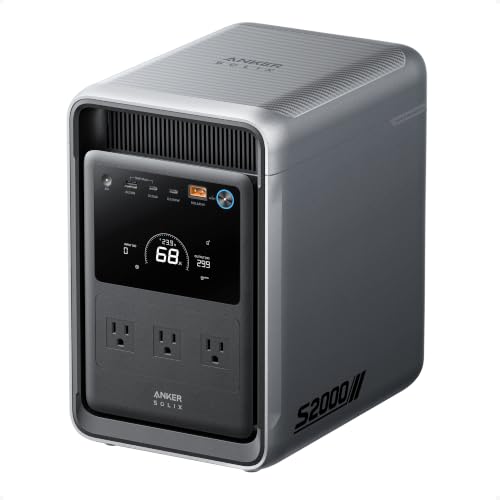
Anker SOLIX S2000 Power Station
2,010Wh of capacity with UPS-grade switchover for home backup. Nearly double the runtime of the C1000 for longer outages.
For multi-day outages, capacity is what counts. The SOLIX S2000 doubles the battery of the C1000, enough to keep a refrigerator running two days or a CPAP going for a week, and its UPS mode switches over fast enough that a desktop computer stays on when the grid drops.
Who it's for: Households preparing for multi-day outages, remote workers, and anyone backing up medical equipment. Pair it with the SOLIX C800X with 100W solar panel (~$450) if you want a smaller kit that recharges off-grid.
Size your battery station the same way you size a gas generator: add up the running watts of what you need to power with our Generator Size Calculator, then choose a capacity (watt-hours) that covers your expected outage length.
Buyer's Guide: How to Choose the Right Emergency Generator
Step 1: Calculate Your Power Needs
The single most important step is knowing how many watts you need. Don't guess—use our Generator Size Calculator. As a rough guide:
- Basic essentials (fridge, lights, charging): 2,000-2,500W
- Essentials + freezer + sump pump: 3,000-3,500W
- Essentials + window AC: 4,000-5,000W
- Whole house (with central AC): 7,500W+
Step 2: Inverter vs. Conventional
Inverter generators produce clean, stable power safe for all electronics. They're quieter, more fuel-efficient, and lighter. They cost more but are worth it for most emergency use.
Conventional generators produce rougher power that can damage sensitive electronics. They're louder but cheaper per watt. Best for running motors (sump pumps, well pumps) and basic lighting.
Step 3: Fuel Type
Dual fuel (gas + propane) is ideal for emergency preparedness. Gasoline becomes scarce during disasters, but propane stores indefinitely and remains available at hardware stores. The $50-100 premium for dual fuel pays for itself in the first extended outage.
Step 4: Noise Level
If you're running a generator overnight (you will be), noise matters enormously. Under 55 dBA is excellent; 55-60 dBA is acceptable; over 65 dBA will disturb your sleep and your neighbors.
Generator Safety: Non-Negotiable Rules
Carbon Monoxide Kills
NEVER run a generator indoors, in a garage, or near open windows. Carbon monoxide is odorless and causes death within minutes. Position generators at least 20 feet from any door, window, or vent with exhaust pointing away.
Frequently Asked Questions
What size portable generator do I need for emergencies?
Most households need 3,000-5,000 watts to power essential items like a refrigerator, lights, phone chargers, and a sump pump. If you want to run a window AC unit, aim for 4,500+ watts. Use our Generator Size Calculator for a personalized recommendation.
Are inverter generators worth the extra cost?
Yes, for most emergency use. Inverter generators produce clean, stable power safe for sensitive electronics, run much quieter (48-58 dBA vs 70+ dBA), and are more fuel-efficient. The premium is typically $200-400.
How long will a portable generator run on one tank of gas?
Runtime depends on tank size and load. Most portable generators run 8-12 hours at 25% load on a full tank. At 50% load, expect 4-7 hours. Inverter generators with eco-mode can stretch runtime to 10-15 hours at light loads.
Is dual fuel (gas and propane) worth it?
Absolutely. During extended outages, gasoline becomes scarce while propane remains available. Propane stores indefinitely unlike gasoline which degrades in 3-6 months. The price premium is typically only $50-100.
Can I run a portable generator in the rain?
Generators should not be operated in direct rain without protection. Use a generator tent or canopy. Never run indoors, in a garage, or under an enclosed overhang due to carbon monoxide risk.
What is the quietest portable generator?
The Honda EU2200i at 48 dBA is among the quietest. The WEN 56235i (51 dBA) and Westinghouse iGen4500 (52 dBA) are also very quiet. Inverter generators are consistently quieter than conventional models.
How do I safely connect a generator to my house?
Use a transfer switch installed by a licensed electrician. Never plug a generator directly into a wall outlet (backfeeding). Use heavy-duty extension cords for individual appliances as a simpler alternative.
Should I buy a generator before hurricane season?
Yes. During hurricanes and major storms, generators sell out within hours and prices surge 200-300% on secondary markets. Buy during spring sales, test thoroughly, and store with stabilized fuel.
Related Resources
Champion 11,000W Review
Inverter power at whole-home output
DuroMax XP13000EH Review
The most watts per dollar
Honda EU2200i Review
The quiet premium, examined
Westinghouse 12500 Review
Honest specs, low price
Generator Size Calculator
Calculate exact wattage needs
Generator Wattage Reference
Running & surge watts by appliance
Runtime Calculator
How long will your fuel last?
Fuel Storage Calculator
Plan your fuel reserves
Generator Buying Guide
In-depth generator advice
From the Creators of DisasterPrepCalc
The Complete Survival Guide for America 2026
Everything you need to protect your family — from natural disasters to grid failures. Available on Amazon.
Get the Book on Amazon →As an Amazon Associate, we earn from qualifying purchases.