The Complete Guide to Off-Grid Solar for Emergency Preparedness
When the grid goes down, solar power becomes your ticket to maintaining essential services. Unlike generators that require fuel storage and produce noise, a well-designed solar system provides silent, renewable power indefinitely. This guide covers everything you need to know about sizing an off-grid solar system for emergency use.
Grid-Tied vs. Off-Grid
Most residential solar is grid-tied—it feeds power to the grid but shuts off during outages (for safety). Off-grid or hybrid systems with battery backup continue working when the grid fails. This guide focuses on emergency backup capability.
Understanding Solar System Components
1. Solar Panels
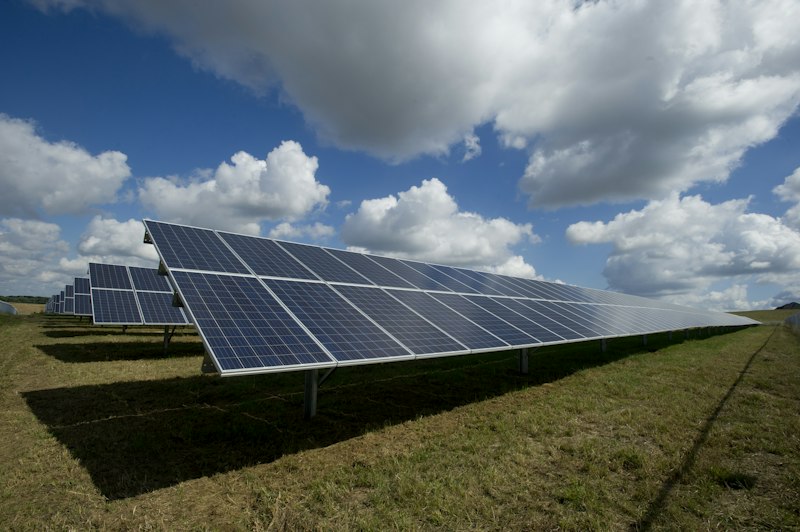
Solar panels convert sunlight to DC electricity. Key specifications:
- Wattage: Typical panels range 100W-400W. Higher wattage = fewer panels needed.
- Voltage: Most are 18-40V nominal. Match to your charge controller input range.
- Type: Monocrystalline (most efficient), Polycrystalline (cheaper), or Flexible (portable).
For emergency systems, 100W portable panels offer flexibility. Permanent installations typically use 300-400W residential panels.
2. Battery Storage
Batteries store energy for use at night or during cloudy days. The two main types:
Lithium (LiFePO4)
- 80-90% depth of discharge (usable capacity)
- 10-15 year lifespan, 3,000-5,000 cycles
- No maintenance required
- Lighter weight (important for portability)
- Higher upfront cost, lower lifetime cost
Lead-Acid / AGM
- 50% depth of discharge (need 2x capacity)
- 3-5 year lifespan, 500-1,000 cycles
- Flooded lead-acid requires maintenance
- Heavy (not ideal for portable systems)
- Lower upfront cost, higher lifetime cost
For emergency preparedness, lithium batteries (specifically LiFePO4) are strongly recommended despite higher cost—they're safer, more reliable, and require no maintenance during storage.
3. Charge Controller
Regulates power from panels to batteries, preventing overcharge. Two types:
- PWM (Pulse Width Modulation): Cheaper, less efficient (75-80%), works with matching panel/battery voltage.
- MPPT (Maximum Power Point Tracking): 95-99% efficient, handles higher voltage panels, better in partial shade. Worth the extra cost for systems over 200W.
4. Inverter
Converts DC battery power to AC for standard household devices:
- Pure Sine Wave: Required for sensitive electronics, motors, medical devices. Use this type.
- Modified Sine Wave: Cheaper but can damage some devices. Avoid for serious applications.
Size your inverter for peak load (all devices running simultaneously) plus 20% headroom.
Calculating Your Energy Needs
The foundation of solar sizing is understanding your daily energy consumption in watt-hours (Wh):
Daily Wh = Device Watts × Hours Used Per Day
Typical Device Power Consumption
| Device | Watts | Typical Hours | Daily Wh |
|---|---|---|---|
| LED Light (per bulb) | 10 | 5 | 50 |
| Phone Charging | 10 | 2 | 20 |
| Laptop | 50 | 4 | 200 |
| Router/Modem | 20 | 24 | 480 |
| LED TV (40") | 50 | 4 | 200 |
| Small Fan | 30 | 8 | 240 |
| CPAP Machine | 50 | 8 | 400 |
| Mini Fridge | 100 | 8* | 800 |
| Full-Size Fridge | 150 | 8* | 1,200 |
* Refrigerators cycle on/off; 8 hours represents actual runtime over 24 hours.
Solar Panel Sizing Formula
Once you know your daily Wh needs, calculate required solar wattage:
Solar Watts = (Daily Wh × 1.25) ÷ Sun Hours
The 1.25 factor accounts for system losses (wiring, charge controller, battery charging inefficiency)
Example: 2,000Wh daily use, 4 sun hours average
Solar Watts = (2,000 × 1.25) ÷ 4 = 625W
You'd need approximately 650W of solar panels (2x 330W panels or 6-7x 100W portable panels).
Battery Sizing Formula
Size your battery bank for your desired days of backup without sun:
Battery Wh = (Daily Wh × Backup Days) ÷ DoD
DoD = Depth of Discharge (0.8 for lithium, 0.5 for lead-acid)
Example: 2,000Wh daily, 2 days backup, lithium batteries
Battery Wh = (2,000 × 2) ÷ 0.8 = 5,000Wh
You'd need approximately 5kWh of lithium battery capacity.
Peak Sun Hours by Region (Annual Average)
Sample Emergency Solar Systems
Tier 1: Basic Emergency Kit (~$500-800)
- Panels: 200W portable solar (2x 100W)
- Battery: 500Wh power station (Jackery, Bluetti, etc.)
- Powers: Phones, lights, small devices
- Runtime: 1-2 days light use
Tier 2: Extended Emergency (~$1,500-2,500)
- Panels: 400W (2x 200W or 4x 100W)
- Battery: 2,000Wh power station or DIY battery bank
- Powers: Above + laptop, router, TV, CPAP
- Runtime: 2-3 days moderate use with solar recharge
Tier 3: Full Backup System (~$4,000-8,000)
- Panels: 800-1,200W (rooftop or ground mount)
- Battery: 5-10kWh lithium bank
- Inverter: 3,000W+ pure sine wave
- Powers: Refrigerator, lights, electronics, small appliances
- Runtime: Indefinite with adequate sun
Installation Considerations
Panel Placement
- Angle: Equal to your latitude for year-round. Steeper in winter, flatter in summer.
- Direction: Due south (northern hemisphere) for maximum production.
- Shading: Even partial shade dramatically reduces output. One shaded cell can cut panel output by 30-50%.
- Ventilation: Panels lose efficiency when hot. Allow airflow underneath.
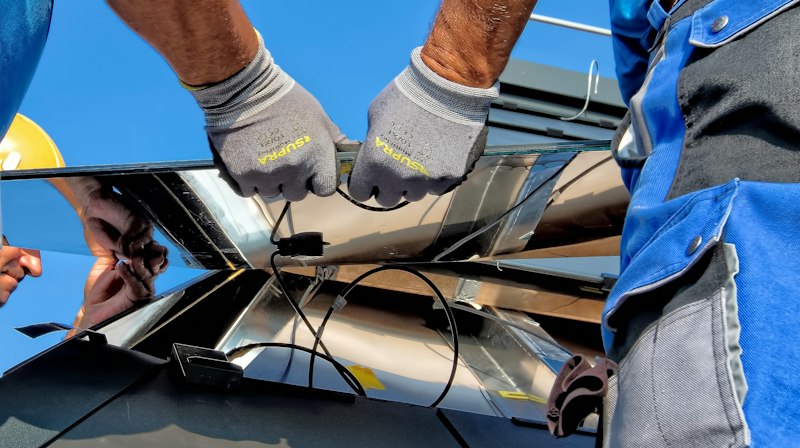
Wiring and Safety
- Use appropriately sized wire to minimize voltage drop (especially for long runs)
- Include fuses/breakers at battery and between major components
- Use proper connectors (MC4 for solar, Anderson for batteries)
- Keep batteries in ventilated area (lead-acid produce hydrogen when charging)
Frequently Asked Questions
How many solar panels do I need for off-grid emergency power?
The number depends on your daily energy usage and sun hours. Calculate your daily Wh consumption, divide by your average sun hours, then divide by panel wattage. For example, if you need 3,000Wh daily with 5 sun hours, you need 600W of panels (2x 300W panels). Add 25% for efficiency losses.
What size battery do I need for solar backup?
Size your battery bank to store 1-3 days of energy usage for cloudy days. If you use 3,000Wh daily and want 2 days backup, you need 6,000Wh of usable capacity. For lead-acid batteries, double this (50% depth of discharge). For lithium, add 20% (80% DoD). A 2-day backup with 3,000Wh daily needs 7,500Wh lithium or 12,000Wh lead-acid.
How many sun hours does my location get?
Peak sun hours vary by location and season. Southwest US gets 5-7 hours year-round. Northeast US gets 3-4 hours in winter, 5-6 in summer. Pacific Northwest gets 2-3 hours in winter. Use your worst-case (winter) sun hours for sizing to ensure year-round adequacy. NREL's PVWatts calculator provides precise data for your address.
Should I use lithium or lead-acid batteries for solar storage?
Lithium (LiFePO4) batteries cost 2-3x more upfront but last 10+ years, offer 80% depth of discharge, weigh less, and require no maintenance. Lead-acid batteries are cheaper initially but only last 3-5 years, can only discharge to 50%, and need regular maintenance. For long-term off-grid use, lithium has lower lifetime cost.
What can I run on a small solar setup during emergencies?
A modest 400W solar + 2,000Wh battery setup can run: LED lights (10-20W), phone/tablet charging (10-20W), laptop (50W), router/modem (20W), small TV (50W), CPAP machine (30-60W), and a small fan (30W). It won't run: refrigerators, microwaves, AC units, electric heaters, or hair dryers.
Related Calculators
Power Station Runtime · Generator Sizing Backup Power Hub · Solar Recharge Time
Recommended Solar & Power Gear
As an Amazon Associate, we earn from qualifying purchases. Disclosure
From the Creators of DisasterPrepCalc
The Complete Survival Guide for America 2026
Everything you need to protect your family — from natural disasters to grid failures. Available on Amazon.
Get the Book on Amazon →As an Amazon Associate, we earn from qualifying purchases.